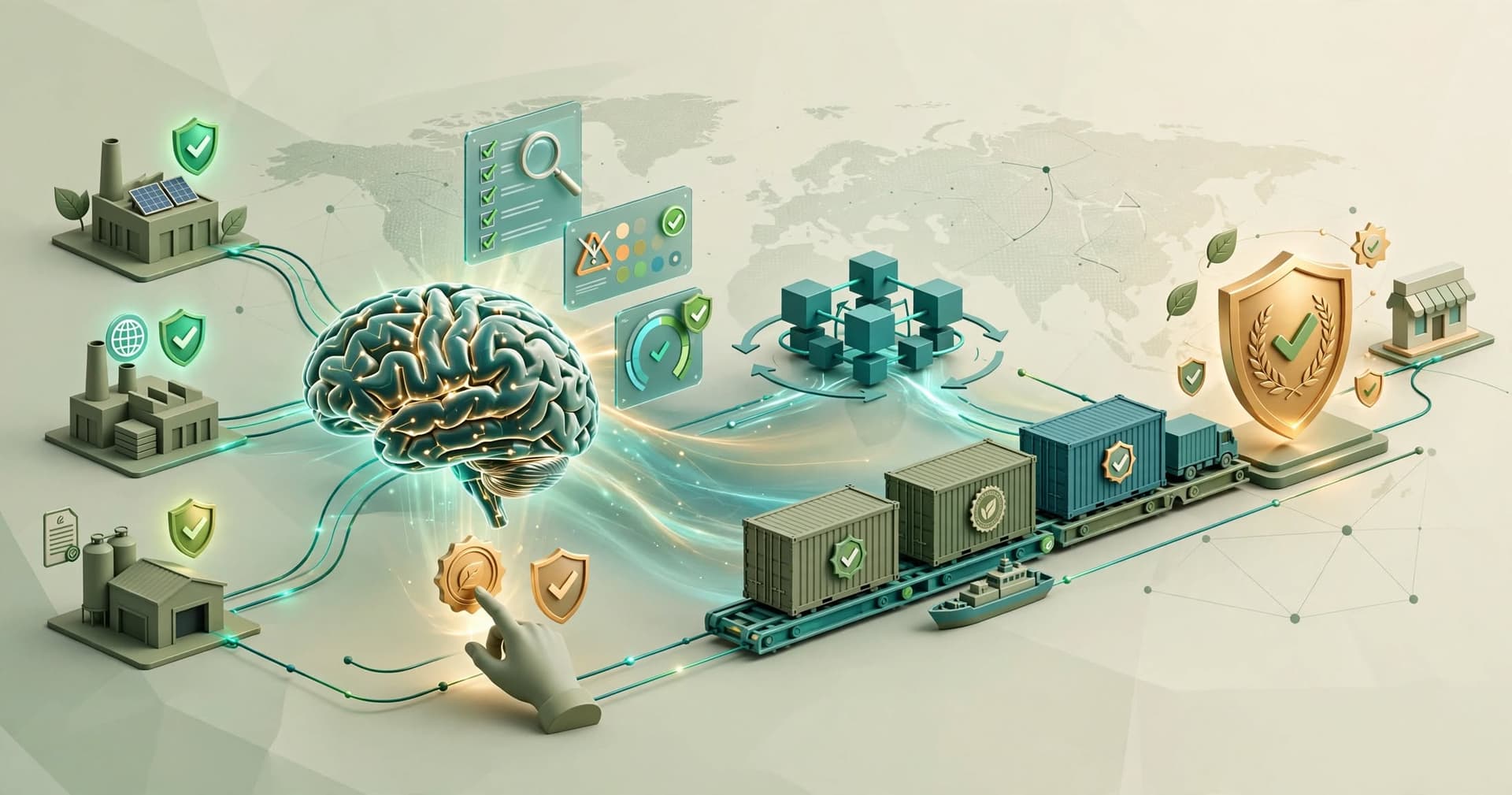
AI-driven ethical supply chain management helps SMBs protect brand reputation and improve resilience by spotting supplier risk earlier, verifying sourcing claims more consistently, and accelerating responses when disruptions or compliance issues appear. In practice, AI is most valuable when it connects procurement, inventory, vendor, logistics, and compliance data into a system that flags exceptions, supports human decisions, and leaves an auditable record of why actions were taken.
Key takeaways
- AI improves ethical supply chain management by continuously monitoring supplier risk, identifying anomalies, and turning scattered operational data into usable decisions.
- For SMBs, the practical goal is not perfect end-to-end visibility on day one, but a measurable reduction in supplier, compliance, and reputation risk.
- A strong ethical supply chain program combines AI models with clear sourcing policies, human review, and auditable workflows rather than relying on automation alone.
- The fastest path for most SMBs is to start with one high-risk supplier category, integrate existing ERP and procurement data, and automate exception handling first.
- Brand reputation is strengthened when companies can document how supplier decisions were made, respond quickly to issues, and communicate corrective action with evidence.
Why ethical supply chains have become a brand and operations issue
For small and mid-sized businesses, supply chain ethics are no longer limited to large enterprise sustainability reports. Customers, channel partners, lenders, insurers, and even prospective employees increasingly want evidence that products are sourced responsibly, vendors are screened consistently, and disruptions can be managed without last-minute improvisation. A single supplier labor controversy, sanctions issue, counterfeit component incident, or data security failure can quickly become a reputation problem, not just an operations problem.
What has changed is the speed and visibility of failure. Online reviews, partner audits, social media, and procurement questionnaires can expose weak controls fast. SMBs often feel this pressure more acutely because they have lean teams, less buffer inventory, and fewer alternative suppliers. Ethical supply chain management therefore needs to do two things at once: reduce real-world risk and make that reduction demonstrable. AI helps because it can evaluate more signals, more often, than a manual spreadsheet process can realistically handle.
In our experience, decision-makers get the best results when they treat ethics as a practical risk domain with operational consequences: supplier continuity, regulatory exposure, customer trust, and contract eligibility. That framing makes investment decisions easier. It moves the conversation from broad values statements to concrete controls such as vendor onboarding rules, traceability checkpoints, document verification, and automated incident escalation.
Where AI creates practical value in ethical supply chain management
AI is not a single tool. For SMB supply chains, it usually means a combination of machine learning, natural language processing, rules engines, anomaly detection, and workflow automation working on top of existing business systems. The most useful implementations focus on narrow, high-value decisions rather than trying to build a fully autonomous procurement engine.
Common use cases include supplier risk scoring, invoice and purchase-order anomaly detection, contract clause extraction, adverse media monitoring, shipment delay prediction, and product traceability analysis. For example, natural language processing can review supplier questionnaires, certifications, audit reports, and policy documents for missing clauses or inconsistent answers. A risk model can combine those results with external watchlists, country risk data, quality incidents, and delivery performance to prioritize which suppliers deserve immediate review.
- Supplier onboarding: AI can validate tax IDs, compare submitted business details against public records, detect duplicate vendors, and flag missing compliance documents.
- Ongoing due diligence: Monitoring tools can scan sanctions lists, litigation updates, adverse news, sustainability disclosures, and cybersecurity breach mentions tied to suppliers.
- Procurement integrity: Models can identify unusual pricing changes, split purchases, invoice mismatches, or order patterns that suggest fraud, quality drift, or unauthorized sourcing.
- Traceability: Data pipelines can connect ERP, warehouse, and shipping events so teams can identify which finished goods are affected when an upstream supplier issue appears.
- Response management: Workflow tools can automatically open a case, assign owners, request evidence, and track remediation deadlines when risk thresholds are crossed.
Technically, these capabilities often sit across systems such as Microsoft Dynamics 365, NetSuite, SAP Business One, Acumatica, QuickBooks integrations, Shopify or Adobe Commerce for order data, and cloud services on AWS, Azure, or Google Cloud. The AI layer might use managed services for document processing, vector search for policy retrieval, and BI tools such as Power BI or Tableau for dashboards. The stack matters less than the governance: clean source data, defined thresholds, and a responsible review process.
What an ethical AI supply chain architecture looks like for an SMB
The most effective architecture is usually modest and modular. Instead of replacing core systems, SMBs typically create a data flow that pulls vendor master data, purchase orders, invoice data, logistics events, and compliance records into a governed repository or warehouse. This may be a cloud database, lakehouse, or integration hub built with services such as Azure Data Factory, AWS Glue, Snowflake, BigQuery, or a lower-code alternative depending on team size and budget.
Once data is centralized enough to be usable, three layers matter. First is identity and data quality: supplier names standardized, duplicate entities merged, and documents tagged so they can be searched and matched. Second is intelligence: scoring models, rules, and NLP classifiers that assess vendor risk, detect anomalies, and summarize issues. Third is action: workflow orchestration through tools like Power Automate, Zapier, Make, ServiceNow, Jira, or a custom portal so alerts become assignments instead of ignored dashboard dots.
Standards and control frameworks should guide this architecture even if a company is not formally certifying against all of them. Depending on the business, that may include ISO 27001 for information security practices, NIST Cybersecurity Framework for supplier cyber risk, SOC 2-aligned vendor controls, GS1 standards for product identification, EDI transaction hygiene, and emerging ESG or due diligence requirements from customers and regulators. Ethical supply chain programs also need explainability. If a supplier is flagged, your team should be able to show which rule, document inconsistency, external signal, or pattern caused the alert.
A step-by-step decision framework for choosing the right AI approach
Many SMBs overbuy or under-scope because they start with tools instead of decisions. A better approach is to map a limited number of high-impact supply chain decisions, then ask what data and automation are required to improve them. The framework below works well for businesses that need progress within one or two quarters, not a multiyear transformation before any value appears.
1. Define the risk events you care about most
Choose a small set of events with clear business consequences: shipment disruption, unethical labor allegation, counterfeit parts, sanctions exposure, missing certifications, quality failures, or supplier cyber incidents. Rank them by likelihood, impact, and detectability. This prevents broad “ethical sourcing” goals from turning into vague software requirements.
2. Identify the decisions that should change
Examples include whether to approve a new vendor, whether to hold a shipment, whether to require a corrective action plan, or whether to shift spend to a backup supplier. If the project will not change an operational decision, it is usually a reporting exercise rather than a resilience investment.
3. Audit available data and evidence sources
List what you already have: ERP records, AP invoices, shipping logs, QA reports, audit findings, signed policies, MSDS documents, emails, spreadsheets, and partner portal submissions. Then note gaps such as missing supplier ownership data, inconsistent SKUs, or PDFs that cannot be searched. Most AI projects succeed or fail here, not in model selection.
4. Start with one workflow and one risk model
For example, automate vendor onboarding for high-risk supplier categories only, or monitor existing suppliers for sanctions and adverse media while routing exceptions to procurement and legal. A focused deployment keeps training and change management realistic.
5. Set thresholds, reviews, and fallback procedures
Define what triggers manual review, who approves overrides, and how quickly issues must be addressed. Ethical risk programs need service levels just like IT incidents do. If a model cannot confidently classify a document or event, route it to a person rather than forcing a brittle automated decision.
6. Measure operational outcomes, not vanity metrics
Useful measures include time to complete vendor due diligence, number of unresolved supplier exceptions, percentage of spend covered by screening, traceability completeness, and mean time to respond to supplier incidents. Those indicators are more practical than generic AI accuracy claims in isolation.
Common pitfalls that weaken trust, and how to avoid them
The first pitfall is treating supplier ethics as a one-time questionnaire problem. Vendors can change ownership, subcontractors, shipping routes, cybersecurity posture, and labor practices after onboarding. Continuous monitoring matters more than a polished intake form. AI is well suited for this because it can re-check records, compare fresh events to historical patterns, and surface drift before it becomes a public issue.
The second pitfall is relying on opaque scores without evidence. A procurement lead needs to know why a supplier was flagged and whether the issue is documentation, geography, pricing behavior, breach history, or something else. Build explainability into the design. Store source links, extracted clauses, confidence scores, and analyst notes so that exceptions can be reviewed and defended during customer audits or internal disputes.
- Poor master data: Inconsistent supplier naming and duplicate records cause false negatives and false positives. Clean vendor data before tuning models.
- No human escalation path: Alerts that do not create tickets, tasks, or approvals are usually ignored after the initial rollout.
- Over-automation: Blocking purchase orders automatically based on weak signals can disrupt the business. Use graduated controls such as warn, review, hold, then block.
- Ignoring cybersecurity in the supplier base: Ethical resilience includes third-party access risk, ransomware exposure, and insecure file exchange, not just labor or environmental concerns.
- Underestimating legal review: Screening logic, retention periods, and external data usage may require counsel, especially across states or international suppliers.
A related issue is communication. When an incident occurs, companies often scramble because they cannot quickly explain what they knew, what controls were in place, and what corrective action they took. An AI-enabled workflow that preserves timestamps, documents, reviewer actions, and remediation steps gives leadership a defensible narrative. That directly supports brand reputation during a difficult moment.
Typical implementation costs, timelines, and operating models
For SMBs, a sensible starting point is usually a focused phase-one project rather than a full supply chain platform replacement. A narrow deployment that centralizes supplier data, automates a single due diligence workflow, and adds basic risk scoring often takes roughly 8 to 16 weeks, depending on system complexity, document quality, and the number of integrations. Typical costs can range from the low five figures for a lighter workflow-centered deployment to the mid five figures or more when custom integrations, external data feeds, and tailored models are required.
A more mature program with ERP integration, external watchlist monitoring, traceability dashboards, role-based approvals, and multiple risk models commonly unfolds over several months in phases. Ongoing costs usually include cloud services, data subscriptions, workflow or BI licensing, model tuning, and governance reviews. The right operating model for many SMBs is a hybrid: internal ownership by operations or procurement, with IT managing integration and security, and a technology partner supporting architecture, automation, and periodic refinement.
At BCW Technology, we generally recommend proving value in a high-risk supplier segment first, then expanding only after the review process is stable. That keeps scope under control and builds internal trust. The long-term goal is not “AI everywhere.” It is a repeatable system that helps your team make faster, better-documented supplier decisions when conditions are normal and when they are not.
How stronger ethics translate into reputation and resilience
Brand reputation improves when a business can back up claims with process evidence. If a customer asks how you vet suppliers, how you identify forced-labor risk, how you handle a vendor breach, or how you trace affected product lots, a credible answer requires more than a policy PDF. It requires records, workflows, and timely decisions. AI supports that by reducing manual blind spots and making oversight continuous rather than episodic.
Resilience improves because the same infrastructure used for ethics can support continuity planning. A supplier risk model can also highlight concentration risk, geopolitical exposure, quality instability, and delivery slippage. A traceability workflow can also accelerate recalls or substitutions. An approval engine designed for compliance exceptions can also route disruption response tasks. This is why ethical supply chain management should not be treated as a soft initiative. Done well, it becomes part of how the business protects revenue, fulfills commitments, and preserves trust under pressure.
For SMB leaders evaluating next steps, the practical question is simple: where would faster, better-evidenced supplier decisions most reduce your downside? Start there. Ethical supply chain AI succeeds when it is tied to a real operational pain point, grounded in clean data, and designed so people can understand and act on what the system finds.
Frequently Asked Questions
What does AI-driven ethical supply chain management actually mean for an SMB?
It means using AI tools to screen suppliers, monitor ongoing risk, detect anomalies in purchasing and logistics, and document how supplier decisions were made. For most SMBs, it is a targeted layer on top of existing ERP, procurement, and workflow systems rather than a complete supply chain replacement.
How quickly can a small or mid-sized business implement a useful solution?
A focused first phase often takes about 8 to 16 weeks when the scope is limited to one workflow such as supplier onboarding, compliance screening, or exception management. Timelines increase when data is fragmented, approvals are unclear, or multiple business systems need custom integration.
Does AI remove the need for human review in supplier compliance decisions?
No. AI is best used to prioritize issues, extract information from documents, and surface risk signals quickly, but higher-stakes decisions still need human oversight. A strong program defines when alerts trigger manual review, who approves exceptions, and how evidence is stored.
What data sources are most important for building an ethical supply chain program?
Core sources usually include vendor master records, purchase orders, invoices, shipment events, quality reports, certifications, contracts, audit findings, and external watchlists or adverse news feeds. The most important factor is not the number of sources, but whether the data can be matched to the correct supplier and used in a consistent review workflow.
Work with BCW Technology
Planning a project around this? We help small and mid-sized businesses across the USA ship it. Explore our services and portfolio, request a quote, or get in touch.